
May 14, 2026
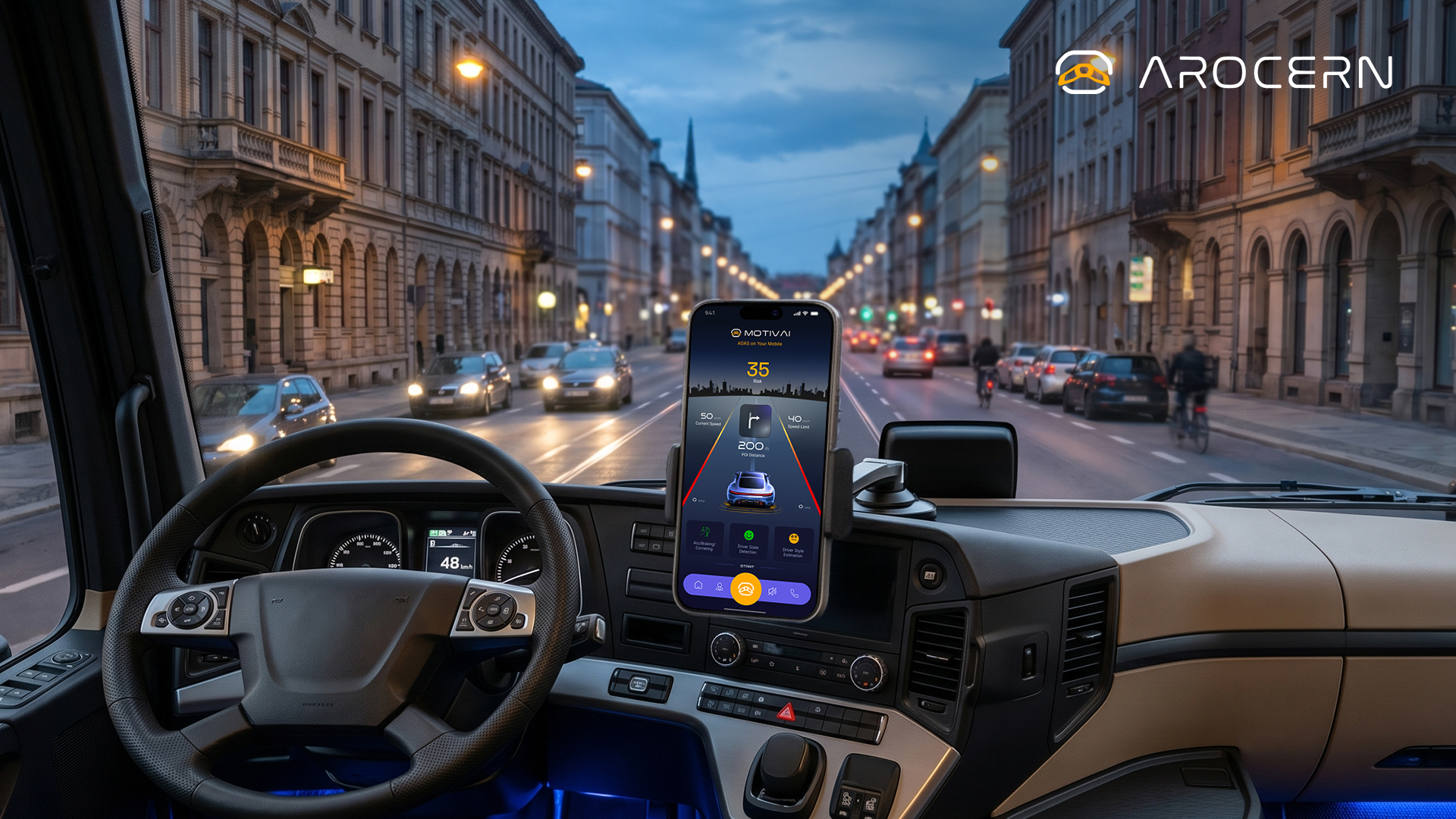
The conversation around fleet telematics has shifted. It used to be about knowing where your vehicles were. Then it became about knowing how fast they were going. Today, the most progressive fleet operators across Europe are asking a fundamentally different question: can we predict and prevent the incident before it ever happens?
That shift in thinking has a name. Prudence-based telematics moves beyond passive data collection into active, behaviour-driven risk management where driver coaching, real-time intervention, and predictive analytics combine to fundamentally alter fleet safety outcomes. And the market data confirms this is no longer a future aspiration. It is a present-day operational imperative.
The average above-the-line cost of a single commercial fleet accident in Europe before indirect costs, litigation, reputational damage, and insurance premium hikes are factored in. Those hidden costs can multiply the total by 3 to 5 times.
Source: Powerfleet / Fleet Complete; Heavy Vehicle Inspection, Sept 2025
For years, fleet telematics was sold as a monitoring solution GPS tracking, mileage reports, basic speed logs. Useful? Certainly. Transformative? Not even close. The industry has quietly accumulated an uncomfortable truth: 88% of fleets now use telematics for safety, yet only 30% share that data with their insurers a six-point drop from the prior year (SambaSafety, October 2025). Enormous data volumes are being generated, but not translated into meaningful safety action.
The result is what safety leaders are calling the "data-rich, insight-poor" problem. Fleets are swimming in telemetry. But the intelligence that changes driver behaviour, the feedback loops, the coaching triggers, the real-time intervention often isn't there. Prudence-based telematics is the answer to that gap.
Prudence-based telematics is built on three pillars:
Rather than simply recording that a harsh braking event occurred at 14:32 on the M25, a prudence-based system asks why and then acts on the answer before the next shift begins.
Driver behaviour monitoring using telematics has been shown to reduce distracted driving by 20%, hard braking by 10%, and speeding by over 25% (Fleet Response, March 2026). These are not marginal improvements. For a fleet running 200 vehicles across Germany, France, and the Netherlands, a 25% reduction in speeding events is the difference between a manageable insurance renewal and a catastrophic one.
"The best fleet safety technology is the kind that never lets an incident become an accident. It coaches before the crisis arrives."
The EU-sponsored SAMOVAR DRIVE project, one of the most cited studies of telematics in Europe, documented a 28% reduction in crashes when telematics monitoring was in place. More recently, Geotab's Safety Centre analytics demonstrated a 5.5% reduction in predicted collisions through advanced risk scoring, while one fleet reported a 76% reduction in speeding in target zones within just three months of deployment (Geotab, September 2025).
If commercial incentive alone were not enough, European regulators are making prudence-based telematics unavoidable. The mandatory fitment of smart tachograph Gen2V2 for all commercial vehicles arrives in July 2026 ensuring every truck in your fleet is generating advanced telemetry data whether you are ready to use it or not. Layer on the Euro 7 standards (effective July 2025 for light-duty vehicles), expanding Low-Emission Zones across London, Paris, Berlin, and Milan, and eFTI compliance due in 2027, and the data infrastructure for prudence-based safety management is effectively being mandated from Brussels downward.
Fleet leaders who treat these regulatory requirements as a burden are missing the opportunity. Every compliance-driven telematics touchpoint is also a safety data touchpoint, a chance to coach, to correct, and to protect. The obligation and the advantage are the same system.
For CXOs who need the numbers to move a board, the incident cost arithmetic is stark. A single injury accident in a European commercial fleet carries an average direct cost of €74,000 and that is the line you can see on the balance sheet. The indirect costs tell a grimmer story: premium increases of 20–50%, legal fees running from €50,000 to €200,000, vehicle downtime, cargo damage, and the near-impossible-to-quantify hit to client confidence (Heavy Vehicle Inspection, September 2025). Fleet accident costs across commercial operators are not ticking upward, they are accelerating. Industry experts confirm a measurable rise in incident frequency and severity since 2024, with accident rates now surpassing pre-pandemic levels and litigation settlements growing larger (Work Truck Online, May 2025).
Against that backdrop, the return on safety investment from prudence-based telematics is compelling. Fleets deploying advanced platforms typically see ROI of 3:1 to 6:1 within the first year driven by collision cost reduction, fuel efficiency improvements of 10-15%, and predictive maintenance savings (Geotab, September 2025; Astreon, December 2025). Insurers are already pricing this reality into their books: the difference in annual premium between a fleet with a strong telematics-backed safety record and one without can exceed £300 per vehicle (Brightmile, via Rhythm Innovations, February 2026). Multiply that across a 500-vehicle fleet and the programme effectively pays for itself before a single collision is prevented.
Prudence-based telematics is not a technology project. It is a leadership decision. It is a commitment to shifting fleet culture from reactive incident management to proactive driver development where data informs coaching, coaching changes behaviour, and changed behaviour protects lives and bottom lines equally.
One in five commercial fleet vehicles is involved in an incident every year. That statistic does not have to apply to your fleet. The question for every fleet director, safety leader, and operations CXO reading this is not whether prudence-based telematics will define the industry standard. It already is. The question is whether your fleet will be the benchmark — or the case study that no one wants to be cited in.
